Wednesday, November 24, 2010

I’ve Moved!


This is a super-short post telling you all that I’ve moved from Blogger to Wordpress. My new address is

jonwclay.wordpress.com


The reason for the move is really quite simple – Wordpress gives me a lot more room to breathe and more options to change how the blog looks, feels and behaves. All the posts from this blog are over there now as well, so you’ll be able to make the small jump with me easily.


I’ll see you there!

Friday, November 19, 2010

Baldessa 1a MADNESS!


Good evening intrepid readers. I did plan on having a whole pile of snazzy-looking medium format pictures to show you but it seems that the mailman forgot to bring that package with him today. Which sucks (more for me than you because I really wanted to see how the photos turned out), but I have something else to talk to you about: My latest camera acquisition – A 1958 Balda Baldessa 1a.

Now those of you who have managed to trudge through the filth that I like to call my blog will know that I already own a Balda Baldessa. But only a 1, not a 1a. For those of you who are wondering what the differences are, well, they’re pretty bloody mind-blowing.

Firstly, the 1a has a coupled rangefinder. This does away with the ‘guess and pray’ focusing methods used with the 1, and gives you the accurate focusing that only a rangefinder can. The rangefinder is also made to compensate for parallax error which is something that the viewfinder on the 1 was notorious for (and my Yashica 35CC, made 20 years later doesn’t have). It has the same lens, shutter and other usual functions that the 1 has too (40mm f/2.8 Westanar).

Baldessa 1a with Metrophot light meter

The Baldessa 1a pictured here with my Metrophot light meter. They are a match made in heaven.

I’ve shown this camera to a few people, and they all ask the same question: ‘How do you take the photo?’ Well, unlike the top-mounted button on the 1 the 1a has the shutter release on the front of the camera (a fashion found on a lot of late 50’s cameras). In the picture above it’s to the left of the lens. The wheel above it is the focusing knob, and their closeness means that you can focus and take photos really quickly – but there’s a danger of knocking the focus wheel when you press the shutter button.

I got this last Friday, and it was in a pretty sorry state. A 10 minute rub-over with a soft cloth got it looking pretty spiffy, I loaded it with Fuji Superia 200 on Saturday and got snapping.

img245lsimg246lsimg251img259lsimg261ls

These are some of the better shots from the roll (I wasn’t looking for artistic prowess but instead looking for correct focusing and shutter speeds). As you can see there’s a bit of a ‘haze’ in the more brightly lit photos. This is due to dust inside the lens (and as such I don’t want to get in there for fear of stuffing it all up).

Overall reaction: this is a good camera with no focusing issues, good shutter speeds (at the fast times, slow times are slow but I don’t aim to shoot any slower than 1/30) and a user-friendly set-up (once you work out where everything is). On top of all that though – the thing looks cool. Everyone I have shown it too comments on it’s shape and feel. And with pictures that spiffy on cheap print film I can’t wait to get some rolls of Ilford XP2 in it!

Thursday, November 18, 2010

Lack of Cash…

This is both true in a metaphorical and literal sense. I’m broke.

Well, when I say that, I’m not really broke. I just have a very limited amount of money to play with until next fortnight. Yep, the 2nd of December. I got paid yesterday too!

You may be sitting there scratching your head and thinking ‘It’s only been one day since he got paid’. You’d be right. But money seems to go away from me quickly. I’ve got to pay rent, the money that I owed my brother, a frigging HUGE mobile bill (thanks to the imbeciles working at Telstra) and $700 worth of savings. The huge amount of cash put away is all part of a plan that I’ve started with one of my work colleagues – and once I’ve ‘saved’ the money I can’t touch it. Which is good, but sucks when I’ve got $100 left in the bank, a tank of petrol and a bid in for a Yashica MAT EM Twin Lens Reflex (TLR) camera on eBay.

Oh yeah, I’m thinking of getting another camera. Why? Because of what it shoots – square negatives. How cool is that? And at the moment it’s $50. If it gets much higher I won’t worry (especially since it doesn’t have a working light meter, but it’s in awesome condition). It looks like this:

5181097444_6d407f6cc0_b

How cool is that?

My most apparent lack of moolah also means that I can’t get any new film (which is going to be XP2, and lots of it). This means that I’ll be shooting a lot more 120 format film (which would be cool if I got the EM), and 35mm slide film. I won’t be able to get it developed though – but that’s ok (I’ll shoot five or so rolls and then send it up to Brisbane again in a month or two). And Fuji Velvia isn’t good for portraits – unless you cross process it.

Cross processing is simply processing a film in the wrong chemicals. So what you do is grab a roll of E-6 film (like my Velvia) and process it in C-41 chemicals. The results can be really freaky, and are super variable. Usually you get stronger blacks, and more subdued tones (but sometimes really strong ones). Do a search on Flickr and you’ll be surprised. I’ll definitely be experimenting with it in the future.

So all I have to do is keep on shooting (more pictures when the DVD from Brisbane gets here with all my Bronica shots from August until last week), and keep on not wasting money. That’s easier than it sounds with me.

And guess what? It’s my birthday tomorrow (the 19th for those people a day behind). I’m turning 24. Awesome.

Saturday, November 13, 2010

You are What You Read

No, I don't mean websites or blogs here (no matter how well they're put together (like mine)), I mean books. Those things with white pages in them. You may have seen them in a library, or even own on or two. That's what I'm on about today.

What made me think about this and want to write about it on a blog about photography? Well, I actually stumbled across something whilst looking at some of the awesome art that modern photographers are pumping out nowadays in film and polaroid. I happened upon a photographers confession (for lack of a better word) about how they actively look for the bookshelves of their models, and that it's a window into their world, into who they are. The photographer even went on to say that if they don't have any books to leave the house and never go back again. Perhaps non-book readers don't have a soul. Who knows?

For some reason this struck a chord with me. I don't know why, but I started to think about the books I have in my personal collection, and what they say about me as a person. I'm not one to make up my own opinions on the matter, but I am more than happy to give you the bare bones of my collection and then let you decide who I am from what I read. Ok - here it goes:

Rough number of books in my bookshelf/shelves:
Over 100

5 Authors whose works I enjoy reading:
Wilbur Smith
Matthew Reilly
Sara Douglass
John Wyndham
Randy Lee Eickhart

5 Authors (and the book/s) that have made an impact on my views:
Alexander Solzhenitsyn (A day in the life of Ivan Denisovich; Cancer Ward)
Kurt Vonnegut (Slaughterhouse 5)
George Orwell (1984)
Aldous Huxley (Brave New World)
Truman Capote (In Cold Blood; A Christmas Tale)

Book(s) I am currently reading:
Wilbur Smith (Sunbird)
Vladimir Nabokov (Collected Stories)

Last book I finished reading:
Slaughterhouse 5 - Kurt Vonnegut

Fantasy or Science Fiction?
Science fiction all the way!

Art books in your shelves:
Two on the work of Imogen Cunningham, one each on Willy Ronis, Henri Cartier-Bresson and Zoltan Glass. A book on the body in photography, and another showing all the images printed in Steiglitz's Camera Work. Anyone would think that I want to take photos of people (which I do).

I reckon this shows who I am to a large degree. Of course if you were to actually go through my bookshelves you would find other interesting facets (like the fact that I've collected and read a lot of Penguin Classics novels) and realise that there are lots of older, pre used books in my collection (the earliest is a French novella published in 1897).


And there it is - a snapshot of the author of this blog through the books sitting on my shelves. I dare you to take a look at your bookshelf and see how much it reflects who you are.

Monday, November 8, 2010

Black & White Film and Colour Processing.

Bonjour readers! Keeping on the same vein of ‘Show and Tell’ that I’ve been doing with my posts recently I’ve decided to write about film today. And specifically what works (and what doesn’t) for me. Film is a wonderful thing – different brands (and speeds) will give you different results. I’m always on the lookout to find different films that will give me something else in a shot.

Most of the films I use are colour-process or C41 films. This is because there are heaps of places around that happily process and print these films. Transparency (E-6) or Black and White films are usually processed in big regional centres and cities nowadays. Even with the fact that E-6 and Black and white film is a bit harder (and costlier) to process, the results most certainly make up for it.

So without gilding the Lily any further, I present you with the two best C41 films that I reckon are out there today.

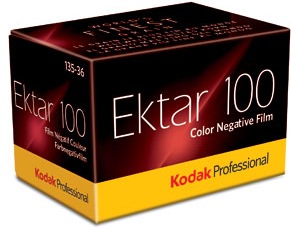
Colour (C41): Kodak Ektar 100 (in 35mm and 120)

I’m not a fan of colour print/negative film overall. The colours aren’t what I perceive them to be, and they often seem murky. But in saying that when you get a good colour shot it looks really good. And from the film that I’ve use my favourite is Kodak Ektar 100. This stuff is reported to provide you with super saturated and fine grained shots. And it does that really well (although you usually need to do some level adjusting when you scan – it’s notorious for being a bit of a bugger in that respect). I’ve used both the 35mm and the 120 roll film of Ektar and it is pretty snazzy. All in all I reckon it’s the best colour negative film out there.

F1010004sF1010024sF1020022lsF1020026sHells

Above: Only the picture of the church had some colour level adjustment (it looked very blue because of underexposure, but I still salvaged it). Everything else is the same as it was off the negative.

C41 Black and White: Ilford XP2 Super 400 (in 35mm and 120)

Now there are some of you out there that are thinking ‘Hold on, he’s gone mad. You can’t have a colour process black and white film!’. Well the cool thing is that you can. There are currently two colour process black and white films on the market today (that I am aware of), and this is the best. In fact it’s the only black and white film I use in my 35mm cameras – if you have a squiz at my Flickr page you’ll see that I like to use it and it gives awesome shots. The 400 speed that it has is really good for low light shooting too, but this film is so forgiving that you can shoot it from ASA/ISO100 to 1600 with very few issues. For the finest grain Ilford recommend shooting it at 200, which gives a more exposed shot (but that shouldn’t matter if you’re scanning because you simply alter the levels to give clear, crisp shots). I’ve currently got a roll set at 500ASA in my 35CC, and I can’t wait to see how it goes (especially with the contrasty Yashica lens).

Other films I’ve used:

Kodak Portra 160VC: So far the results are pretty poor. I took the first few rolls in cloudy weather and the shots came out murky and not vivid (as it is supposed to be). I’ve got a few rolls in some cameras at the moment and the weather is a lot clearer. I’ve got high hopes (and standards) for this film.

Kodak Gold 400: A good film, but I still prefer Ektar. If you need a fast colour film get this one. Plus it’s cheap and easy to get which is a bonus.

Fuji Velvia 50: I’ve taken one roll of this in 120 format, and haven’t sent it to get processed. It’s E-6, and reported to be the best colour film ever. I’ll tell you how it went when I get it developed.

Fuji Velvia 100: As per Velvia 50, but in 35mm. .

Efke R25: A Croatian 120 format film that uses a really old silver-rich recipe for the emulsion. Supposedly really good. I’ve exposed a roll, and sending it up with the Velvia and the other 120 rolls.


A final note:

Film is expensive – many of the ones I shoot with cost around AU$10 a roll. Processing varies from $7 (for C41 develop and prints) to $10 (E-6 and B&W developing), and you add around $10 more per roll to get them scanned. But despite this it’s a wonderful thing to use, and the image is a lot more detailed than 99% of the digital photos out there.

Another final note:

These are the films that I like. You may find them to be useless. The best way to find your favourite is to test them out.

Sunday, November 7, 2010

Optimus Prime-Focus

This is the third attempt to write a blog post about camera lenses. I hope that it it the one that gets published onto the blog, mainly because I’m getting a little miffed over the fact that this is the third attempt at writing a post on lenses. And even then this one only scratches the surface of a small aspect of them. That means more writing at a later date…

So you’ve decided to get a digital SLR. You go to the camera store, and the dude there pushes a Twin-lens zoom kit. They claim that you can take really good photos with them. Look in this booklet – see how good those photos are? They’re taken with the same lenses in that kit. The second you use them you’ll take awesome pictures. It’s as simple as that.

Well, sadly, 99% of the stuff that the people at stores like that tell you is crap. As I’ve said before, the thing that takes good photos is ultimately you. Thankfully though many lenses that are thrown with DSLR bodies are pretty good nowadays. (By the way, if you want to know how to take good photos have a look at this post that I wrote about photographic technique a few months back).

Even though kit zoom lenses are usually really good, they often lack the high aperture that is needed for good bokeh and low-light usage. You can spend a pile of cash to get a zoom that takes care of this, but you can also spend a very small amount of your money and get a prime-focus lens.

Prime-focus lenses are simply non-zooming – they have a set focal length. This may seem odd in a world of zoom everything, but there was a time when prime-focus lenses were all there was. You may be asking ‘But how can you use a fixed lens to compose a good photo?’ That’s simple – you become the zooming feature. If you want to remove things from the frame you move closer to what you want to keep. If you want to include more just do the same thing, but in reverse.

If you aren’t too fussed about whether or not you can control field of depth or shooting in low-light with no flash then I reckon you should stick to the zooms. They do a good job, and you can concentrate on taking photos instead of wasting money on lenses (like I seem to do).

If you are thinking about getting a P-F lens but are still a little unsure, do a Google search on Henri Cartier-Bresson. Throughout his photographic career he used only one lens – a 50mm prime focus. Have a look at his work. It’s the stuff I strive towards.

And if you’re dead certain about getting one I recommend either a 35 (for DX digital) or 50mm (for FX and film) one to start off. Brand new f/1.8 examples with autofocus can be purchased for as little as AU$150. Cheap hey!

If you’re serious about photography you should have at least one prime focus lens. It will make you think more about the photographic process a lot more than a zoom lens will, plus allow you to do so much more.

N.B. In saying this I use zoom lenses – I have a 35-70mm zoom that I use as a macro lens (I add the macro filters to it). Apart from that you’d be hard-pressed to find a zoom on my camera.

Saturday, November 6, 2010

Busy Body


Good evening readers. You find me sitting in front of my computer with some interesting news. Some is good, some is slightly concerning. Not all of it I will tell you in any great depth, but you should have an idea as to what it going through my head at the moment by the time you finish reading this.

The first thing I wish to tell you is that I have had another reply to my mass emailing to the local galleries in the area. The gallery who replied said the following things:

Hi Jon [if you haven’t worked that one out that’s my name]

Thanks for your email. I have looked at your website & your photography is fantastic.

I have no plans at the moment for a photography exhibition as I have every photographer around the New England and beyond asking for an exhibition. However your work is superior to most that I have seen.

If I plan on having a photography exhibition I will let you know but it would not be until 2012.

Kind Regards,

[The Art Director for the Gallery]

Firstly – AWESOME! They think my photography is ‘fantastic’ and ‘superior to most that I have seen’. That’s pretty bloody cool if I say so myself. Then again that could be the writer politely saying ‘Another one? Man! I’ll just write something nice so they go away’. I’d like to think that it’s not though.

Secondly, it’s good to see that there are plenty of photographers looking for wall space in the area. This means that there isn’t a problem with the people taking the shots – except maybe for quality. There may be an issue with galleries not thinking that photography is a true form of art or up to the calibre that they want to show, but I wouldn’t think so. There are examples of photography out there that are as good as the other more traditional forms of art.

And lastly (for this point) – why is there such a wait for any kind of show in the small regional galleries? The competitive show is 11 months away, and the possibility of a show at the abovementioned gallery is a bit over two years away! I need to some more investigating to find out why.

The other big issue I am having at the moment is with work. Nothing huge, but annoying. Just small crap that makes everyone annoyed when you find out that you’re not in the loop and you notice other people clawing their way to the top over their work colleagues. Worst case scenario: I go overseas to work as a teacher. Too easy!


But never mind about that – let’s talk photography. I am thinking of getting up early tomorrow for some dawn photography – I have only five shots to take on the roll of Velvia 100 in my Nikon FE, and then I reckon I’ll do a major shipment of film up to PROLAB in Brisbane (who I am now going to send all my 120 and E-6 film to after the treatment my film and I got at the local store in Armidale) – I’ve got 6 rolls of 120 and the 35mm roll. They will be processed and have Hi-Res scanning for $20 a roll. Not bad I reckon.

Until the next time, keep well.

Thursday, November 4, 2010

Mobile Choice Bro!


Hey all! Just a super-quick post this evening. What's special with this post is that it's the first that I am writing from my mobile phone (an HTC desire). I am not going to be writing from here very often, but the simple fact that I can means that I will be able to write whilst on holiday and away from my computer (although I rarely go on holidays so in that respect we're pretty safe).

So all in all I'm happy with the fact that I can write from my phone. Isn't technology amazing?

Wednesday, November 3, 2010

Fan Base!

img208cls

I have one of these! In a metaphorical, not literal sense though…


Hola intrepid explorers of the interweb! I come to you with some good news – I have a fan base. It’s small, but you know who you are. I have readers all over the world too – mainly from Australia but also from the US, China, Canada, South Korea, Germany and Israel. Pretty cool.

To those people who always put up with my constant crap, thank you. It makes it worth my while to write. Now, the next step to making this experience better for all of us is to join up (more for my benefit than anyone else) and/or comment on my posts. You don’t have to, of course but it would be good to hear something back. If you think what I write is crap, tell me. If it’s good, tell me. If you don’t know about something, tell me. If you have an old camera lying in your cupboard and you want to put a roll of film in it TELL ME! I’d love to hear what you have to say.

Apart from my happiness about knowing that people read this, I have been sending emails to local (within 200km of Uralla) galleries to see if they have any photo shows soon. The big thing I noticed was that there are only about 8 or so galleries within this area that are willing to show photos. Of the replies I have got back so far the closest gallery show is in October next year. I’m not too bothered though – I have a plan.

‘What’s your plan’ you ask? It’s really simple. On top of the galleries in the area there are the local shows – you know, the ones with dodgem cars, dagwood dogs and children buying stupidly priced show-bags. They often have a photography section, and I aim to enter at least two in the beginnings of next year. I will be entering the shows as a novice, because that is what I am – I’ve never had my stuff shown at a gallery, and I have really only been snapping away for 6 or so months now.

From what I can gather, you won’t be shown at the big regional galleries until you have cut your teeth on the smaller ones – many galleries ask for a CV as well as a portfolio. This is made even more difficult when there are very few open shows in the area. Maybe I need to go further afield – within a 500km radius. The distance is incredible, and it shows what an interesting state rural and regional photographic art is in.

Bon Camera Voyage!

New Set-up

I don’t know if I like this

Monday, November 1, 2010

Digital SLR – Nikon D90

I’ve been harping on about film for a few posts now, and I think that it’s only right that I spend some time praising my digital SLR. No matter what I say about how good film is, digital allows me to test things and see the results in real-time (which is good for a hack like me that still really needs to learn a lot about photography).

Up until September I was shooting with a Nikon D5000. It’s a great camera, and has some really cool functions. Plus it was just awesome to cut my photography teeth on. But I found myself lacking when I needed to get functions changed quickly (and I seem to always be shifting from MONOCHROME to VIVID) the D5000 wasn’t terribly helpful. Changing simple things like ISO, ADR and white balance was time consuming and a little annoying.

D90 w 35mm

The D90 with an AF-S 35mm f/1.8G lens

When a school friend (who is also pretty serious about photography) said he had a Nikon D90 for sale my ears pricked up, and a little research later had me saving up my shekels for it. And I am glad I did. For starters, it has buttons for specific tasks (like ISO, WB, flash and exposure compensation) that the D5000 didn’t have. It also has a spiffy little LCD screen (with a light) on top of the body that shows everything you need (and thus saves battery on top of being ergonomic), two dials for quick setting changes and a depth-of-field preview button (which is something I have become used to with my film cameras). The VIVID setting is – if anything – too vivid (but really good at making things ‘pop’). The picture size and quality are the same as the D5000, it’s got a bigger body but the viewfinder is teeny compared to my Nikon FE. Overall, it’s a wonderful piece of kit.

D90 w 35mm top

The D90 with an AF-S 35mm f/1.8G lens – Top view

With saying that though, I don’t think you should just go out and get one. If you’re going to be using the SLR every so often and don’t mind/need to flick through menus all the time the D5000 is what you’ll want because it does almost everything the D90 will do. Everyone is different, and has different requirements. A more expensive camera will not take better photos for you – it will simply allow you to change how the picture is taken more quickly and efficiently.

DSC_0606lsw

This was from the D90 yesterday when I was shooting with the FE. This maidenhair fern was being whipped about by the wind too much for the ISO100 Velvia to take an un-blurred shot so I spent a bit of time snapping with the D90. The result? Something that I like a lot!

Sunday, October 31, 2010

Macroscope

Have you ever looked really closely at an object and thought ‘Wow’? I have all my life. As a really young child people would call me ‘The Little Scientist’ because I was always looking at plants and insects really closely (little did they know that I was actually going to become one). My fascination with things close up still remains to this day.

One of the big issues I had with communicating my passion for looking closely at things in photography was that all the cameras that I used couldn’t get close enough – this had to do with the fact that they were either cheap film or compact digital cameras. Even when I started playing around with SLRs I couldn’t really get in close, and I’d use a telephoto lens to do so (which made me lose detail).

Thankfully a conversation with a student a month or two ago at work put me on the right track – a set of cheap close-up filters off eBay would convert any of my SLR lenses to macro! I couldn’t believe it, but I forked out the AU$25 or so and got a set sent to me. I’m glad I did. They convert the 60cm minimum focusing distance on the 50mm lens to about 5cm. Just remember that if you’re going to use them to have a really small aperture (I almost always have it at f/22) to adjust for the lack of focus.

Let’s fast forward to today. For the first time since getting the filters I’ve stuck them onto a film camera – my Nikon FE which is loaded with Fujichrome Velvia 100. I used my 50mm f/1.8 lens, but from using the filters on digital I knew I needed to keep the background clear from outside debris and other crap which may draw the eye away from what I want. (even though it will be really out of focus). Thus the ‘home studio – daylight’ was born with a stool, some black material and my FE on a tripod. It was all set up on my veranda, and as you can see from the picture below it worked out well with the diffused light coming in. I set the automatic timer on the FE, focused and let it go. Most of my shots were of plants, but I got a few bits of mail photographed as well.

DSC_0614st

I was going to plug in my 1000w halogen lights (my ‘studio’ lighting) to increase contrast and put some awesome shadows in, but I decided against it, mainly because I’m testing to see how it all goes.

We’ll all have to wait for the results – one of the issues with film I’m sad to say. There should be no reason for it not to have worked – I checked the image at f/22 before every shot. And so you aren’t left hanging I’m putting in one of my other up-close shots taken with my D90. Enjoy!

Nocturne #2

Saturday, October 30, 2010

Sunday Morning Fish.

Morning. It’s Sunday here in Australia and I’ve been fishing for trout. I didn’t get anything (which is a shame) but I did get to spend some tome on a very nice stretch of river. Plus what’s better to do on a Sunday morning than to be out and about in the world, having a look around? Not much!

DSC_0105

Not the river I was fishing on today, but one about five minutes from where I live.

This post is really here to remind all my intrepid readers (of which I am now thinking there must be millions) about where they can find my pictures, and other sites that I have got.

Firstly, I have my Flickr page (found at www.flickr.com/photos/postafrontale). It holds all my ‘ok’ to ‘awesome’ shots. I’m surprised with flickr – there’s a lot of good stuff on there (as well as really helpful forums).

Secondly, I have a DeviantArt page (found at http://postafrontale.deviantart.com/). It has some of my photos (but the same ones can be found on flickr). I had high hopes for DA at first, but I’ve got to say that it’s mostly full of pasty emo teeny-boppers in poorly made costumes from anime, or computer-generated anthropomorphised animals. Disappointing.

And last I have my own personal portfolio site (found at www.jclayphotography.com). I made it just for showing to galleries and the like for shows. So far I haven’t sent the link to anyone, but I am going to soon. There’s an amount of somewhat unnecessary concern that I have with asking galleries to peruse my stuff – a fear of being told “Ah, it’s really crap”. I’ll get over it one day I suppose.

I’m Back! and Film Camera Breakdown.

Good day all. It’s been a while, and I was thinking of shutting the blog down for a long time. But I’ve decided against it and will start writing again. I reckon that the amount of blog posts is directly proportional to amount of stuff I have to do at work – although that is still just a theory…

What’s a good subject for a new post? What’s happening in the world of my camera collection is what! Lots has happened since I last wrote – I’ve upgraded my D5000 to a D90, bit the bullet and purchased a rangefinder, got a pile of lenses to play with and have been shooting a lot more film. It’s a lot to put into one post, so I’m going to split it into a few (more for ease of writing than anything else). Today’s subject then: my film cameras.

The Viewfinders: Olympus Trip 35 (1967-84) and Balda Baldessa I (c.1957)

Olympus TRIP 35 and Balda Baldessa I

Both these cameras came into my possession for no cost whatsoever, and both have taken really good photos.  They are viewfinders – the focusing is done externally (and is largely an educated guess) by turning the focus ring to the distance that your main subject is from it, and the window you look through is a rough guide to what is going to be in the frame. Don’t think about getting objects where you precisely want them – parallax isn’t addressed in either (which I can personally attest to with pictures where the subject was in the centre in the finder but came out looking skewed and dodgy).

The Olympus Trip 35 is an automatic, aperture-priority camera with a 40mm f/2.8 lens. ISO range is from 25-400, and it has two shutter speeds (1/40th and 1/200th of a second). The determination of shutter speed and aperture is done entirely with a solar cell (located around the lens), meaning that it does not need batteries. If there is not enough light, a red ‘tag’ will pop up in the finder and you won’t be able to take the shot. Composing shots is difficult for close-ups, but pretty good all up for landscapes. Ken Rockwell has a page for the Olympus Trip here.

img128sl

Taken with the Olympis Trip 35, Ilford XP2 Super

The Balda Baldessa I is a manual un-metered viewfinder probably made in 1957 (in 1958 a design change was made to the finder to help with composition) with a 45mm f/2.8 Westanar lens and a Pronto-SVS shutter. The trippy thing with the Baldessa is that the film advance and rewind levers are situated on the bottom of the camera. This is really easy to adjust to, and it takes really crisp photos. Another big thing with the Baldessa is that it just looks good – and that makes up for the fact that you need to use an external light meter and that it’s a viewfinder camera.

Balda bottom

The base of the Baldessa I showing the film advance (left) and rewind (right) levers. The advance lever is flipped up, showing the frame counter. The rewind lever is unlocked by flicking the T/R switch to R.

Untitled #2

Taken with the Baldessa, Ilford XP2 Super.

Despite the fact that the viewfinder is a setback (as far as composing goes) to the cameras, they are dirt cheap. I purchased another Trip 35 for AU$15 off eBay, and Balda cameras usually pop up with a price-tag between $10-50.

The Rangefinder: Yashica Electro 35 CC

Yashica ELECTRO 35 CC

The latest in my collection of cameras, the Yashica Electro 35 CC has really impressed me in the short time of ownership with the exceptional focus, clarity and contrast of the pictures that it takes. I understand how photographers like Henri Cartier-Bresson, Willy Ronis and Robert Doisneau spent their careers shooting with rangefinders!

It is an aperture-priority automatic camera with a rather wide 35mm f/1.8 lens . There is no shutter speed control, and the speeds go from 1/250th to 8 seconds. There are two warning lights (in the shape of arrows) in the viewfinder – a yellow one that tells you that the shutter is going to be open for more than 1/30th of a second (so put it on a tripod), and a red one saying that the shutter speed is too slow for the light and the photo will be overexposed. ASA/ISO setting go from 25 to 500. The size means that I can (and do) slip it into my backpack so I’ve got an excellent camera at my disposal at all times that is able to accurately focus and expose shots.

If anything (especially after shooting with this one), I would like to own one of the really nice European designed rangefinders (e.g. Leica or Voigtlander), but the price tag is enough to make anyone (except the craziest and wealthy) whimper. The Yashica will do me well for many years to come!

img187ls

Above and Below: Yashica Electro 35 CC, Ilford XP2 Super.

img198cls

The SLR’s: Nikon FE (35mm) and Bronica ETRS (6x4.5cm)

Nikon FE 

As my first film camera, the Nikon FE did (and still does) everything I needed and more. It is both aperture-automatic and manual, with a whole pile of features that most SLRs have – except it can take every lens ever made by Nikon from 1959 (except for some extremely rare and old fisheye lenses). The only beef anyone could have is that it isn’t an autofocus camera, but that’s something that I know taught me a lot about photography in the short time since I’ve been serious about it. The match-needle shutter speed indicator is analogue, and is really easy to read (but you need light travelling through the lens to be able to see it – a hitch in very low light). It’s simple to use, robust and is able to correctly expose photos in near darkness when in AUTO (just remember to pack a tripod!). On top of all of this, it is smaller and simpler to use than my old D5000 and D90 and it gives better photos.

The lenses I have for the FE are also useable on my D90 (although about half don’t have metering which is a pain), which means that I don’t need to have two sets of lenses for digital and film. I’ll go into my lens fetish in detail in another post.

F1020047

Above: Nikon FE w/ 50mm f/1.8 Nikkor Lens, Ilford XP2 Super. Bad scan done by camera shop…

img141ls

Above: Nikon FE w/ 50mm f/1.8 Nikkor Lens, Ilford XP2 Super. Better scan that I did.


Bronica ETRS

The Bronica ETRS is – simply put - a big bastard of a camera. This thing takes 6x4.5cm negatives, which are worlds more detailed than 35mm film and even digital photos. Because of this it is a heavy camera, but is really useable. Just like the Baldessa I it is un-metered, which means that you need to carry around a light-meter to tell you what you need to shoot at, but if you have a self-powered light-meter like my pre-cold war Metrophot meter which is small, light and easy to use your time trying to work out what to set your camera at becomes really short and fun. The 80mm f/2.8 lens takes nice clear photos, and the waist-level finder makes focusing really easy to do – but there are times when I’m glad I also have an eye-level finder.

With the larger film size comes issues with developing – I can take my 35mm film to Big W for processing and printing and it will cost $7.00, but one roll of 120 film will set me back $20 at a local camera store. Finding a mail-order lab in a capital city usually drops the price of developing significantly (I’ve found a place in Brisbane that will process and do hi-res scanning for $18 a roll).

Overall, I’m really happy with the ETRS. If you’re thinking about getting one (or any medium format camera for that matter) I say go ahead. You will love it.

 dangarssm

Bronica ETRS w/ 80mm f/2.8 lens, Kodak Ektar 100.


I hope you enjoyed reading this. It’s good to back into the swing of things, and I’ll be back to write some more. Until next time!

Friday, August 27, 2010

The ETRS of DOOM!

Bonjour readers! This Saturday afternoon finds me happily sitting in front of my computer a little bit wiser about Medium format cameras than last night.

If you don’t know, I recently purchased a second-hand Bronica ETRS off eBay and got it in the post yesterday. It is in good condition apart from some peeling of the leatherette stuff that’s on it and some dust (it did come from Mildura so that is to be expected). When it turned up it didn’t have a lens cap or a dark slide, but I got around those issues and gave it a once-over. I was glad to find out that the film back could be opened whilst attached to the back. Loading 120 roll-film is different to 35mm, but it’s not difficult. For a camera that takes 6x4.5cm negatives, it’s well weighted.

The ETRS is a completely manual system (you can buy auto exposure prism finders, but I’ve heard that they’re dodgy). Not so cool if you’re into the snap-then-run mentality of many photographers today. Plus I’m really enjoying manual focus these days – strange I know but I’ve come to enjoy stranger things before…

So one roll of film down in a day and I would like to think all but two or three will be good shots. Some are going to have bits that I didn’t want in them, but it’s all about learning.

Photos will be put up when the film gets developed!

Tuesday, August 24, 2010

Artistic Photography for the Artistically Challenged.

It’s been too long since I wrote on the blog, so I am going to write you all a big one today. The title is pretty bloody obvious, but if you didn’t get it the first time this blog post is going to be about getting the poor non-artistically minded to take photos that can be classified as art.

Now I’m sure that some of you out there would be slightly put-off by what I just said. In your minds you’ll be thinking “Ah, another art-brained twit telling me to feel the vibe of the situation”. If you were, don’t. I am not artistically minded in the least. I can’t draw, paint, sculpt or do stuff like collages and scrapbooking. I even suck at scientific drawings - during my stint as a Science Teacher all my students knew it well. But despite all my failures in other forms of art I can pull off artistic photographs. Why? I have done some reading and the continual application of some simple to remember concepts has ensured that I can pull off good shots. N.B. I still take shit shots – but my ratio of  good to shit is getting better as time goes on.

1. SEX

No, this doesn’t mean that you should go out and shag anything and everyone you see. SEX stands for Simplify and EXclude. It isn’t one of my original ideas – I read and stole it from Ken Rockwell’s Website (which can be found HERE). You see something. You grab your camera and in about two seconds you’ve taken the shot and you’re off taking a photo of something else. You should have used SEX to refine your picture – it takes more time, but it give you a better photo. It’s an issue with everything these days – we are so obsessed with getting things done in super-quick times that we very rarely stop and think. I own a Balda Baldessa I which isn’t metered, doesn’t have autofocus and the film winder is manual. Every time I take a photo I spend at least one minute getting everything organised for it. Some of you will think ‘That’s a 60 year old camera, get a digital and come into the 21st century buddy’, but I actually enjoy using it.

SEX is the one thing that I always think of when I take photos. It’s one of the best keys to photographic composition: if you simplify your shot so that only the stuff you want in there is, you will get a much better image. This means that you will need to spend more time looking at the edges of your viewfinder. Too many people get the interesting thing in the middle and then snap away. Don’t do this!

4800460672_b9d3dccd1f_o 

Above: This may look like it is something from the 1960’s, but it was only taken a few months ago. I had to simplify the image to exclude all the modern stuff that filled the street, thus giving me the feel that it has.

DSC_4273

Above: These vials only stand around 3cm tall. I got in close and by doing so Simplified the shot by EXcluding the rest of the bench that they were sitting on.

DSC_4023

Above: If I took this shot without using SEX it would be just another happy-snap of the Dangarsleigh War Memorial.

DSC_4621

2. FARTing

Art can be described as ‘Something that causes the viewer to feel an emotion’. FARTing is a good way to ensure that the feeling you get from a subject can be transformed to your viewers.

Another acronym, and again it is from Ken Rockwell (which can be found HERE). It’s meaning is as follows:

Feeling (You often get a feeling that a particular thing/place would make a good photo)

Ask yourself “What is it about that particular scene that interests me?'”

Refine (by using SEX and your brain)

Take the photo

Ken Rockwell’s website gives heaps more explanation to it, but that’s what I have distilled and use. You may thing that I should have put FARTing up as number one, but I personally use SEX more often.

DSC_4384

Above and Below: What feelings do you feel when viewing these? Everyone is different – some may feel desolation, others nothing. Interpretation of art is one of the most confusing areas for me to understand.

4801316378_64f7329e64_o

3. The Rule of Thirds

The rule of thirds is simple – you divide your photo into three both vertically and horizontally (so it looks like a Noughts and Crosses board). The rule of thumb with it is that if you compose around the thirds you will get a visually appealing image. I don’t put much stock in it, but I usually try it out when I’m composing. If it doesn’t look right in the viewfinder it probably won’t look right on film. But just because i don’t use it all the time doesn’t mean that you shouldn’t. Try it out and see if it works for you.

4. Pimp my Digital Camera!

Ok, so you’ve bit the bullet and spent a pile of cash on a good camera. The only issue is that for reasons seemingly unknown your expensive piece of kit gives you washed out colours and not much contrast. Despite what you may think this isn’t happening because you didn’t buy the better model, it has to do with the fact that you’re probably letting your camera think for itself. Don’t worry – most of the issues with colour and contrast can be fixed, but the act of taking a good shot is up to you and you alone.

A. White Balance

When you take a photo where the colours seem to predominately blue in colour you’ve got an issue with White Balance. Look for a thing in your camera menu which says WB. You should get a menu showing different images. The shadow setting will give you the warmest colours for your camera. It’s a cool trick used to make scenes more life-like in a lot of instances. Ken Rockwell has a better explanation of it HERE.

DSC_0226

Above: A scene with normal colour levels but WB set to SHADOW. The yellow of the trees really comes out.

Tree1small Tree2small

Above: Almost identical scenes, taken about 20 seconds after each other. The one on the left had the WB changed to SHADOW.

B. Colour settings

If you think that changing the WB on your camera is good, but you really want to get the colours popping as they should be, you should set your camera to VIVID. You should even be able to go further in and change the saturation levels – turn them all the way up and enjoy colours that are something else. You can always change back to normal at any time, but I really only shoot with VIVID or MONOCHROME on my digital SLR nowadays.

DSC_1035

Above: It was a spectacular sunset, but switching the camera to VIVID ensured that I could capture it.

C. Contrast

I shoot in Black and White on my D5000. People will tell you not to, and that you can make any shot B&W by using photo editing software. I don’t like to use software like that at all, so I shoot in B&W. The issue I had with it until recently was that there wasn’t much contrast – there were piles of greys but hardly any black and whites. The problem – Contrast. If you have a Nikon you may need to turn off Active D-Lighting to get access to it, but it makes it so much better.

DSC_3606 DSC_4435 DSC_4467

Above: Whilst ADL is a great tool to use, the contrast in the two shots above could only be achieved by turning it off and then changing the contrast settings as high as possible.

5. Filters

Buying lenses may be a cool thing to do, but a lot of the time the addition of a filter means that you can do a lot more than normal. The first filter you should have is a UV filter – it doesn’t do much at all but it protects your lens from scratches (which is a good thing to prevent if you’ve just spent $400 on a lens). The second one I’d recommend is getting a Circular-Polarising filter. It works just like a pair of sunglasses, and is really good for making skies a much more darker blue, and stopping the reflection on water and other non-metallic objects. For really bright light (like most of day here in Australia) a neutral density – ND – filter helps as it cuts a pile of light hitting the lens. You can get a whole different range of them done too. The other filter I carry around is an IR (>650nm) filter, but remember that you will need a tripod to use this bugger – exposures of up to 30 seconds should be expected!

DSC_1506   DSC_1536 DSC_1545 

Above: All three photos were taking using an IR filter in the first few hours of dawn.  

6. Look!

The best tools to use for photography is not the expensive camera that you have, or the super-dooper lens with chromatic aberration and vibration reductive-ness and the tripod made from the same stuff as the space shuttles. I use free cameras that were made in the 50’s and still get good shots. The very best tool that you can use for photography are your two eyes. Look at things. Think about what you see. Change your angle and height (usually by crouching down) and see if it all changes. Think if it will look different in black and white or colour. Zoom in or out (if you’ve got a prime focus lens you can do this by taking a few steps closer or away from your subject).

7. Take the photo!

Even with all of this don’t forget to take photos. Over time you will get better at what you do. I’ve only had my DSLR for a few months, and I am still learning. I will always be learning about this stuff. It’s a real challenge for someone as scientifically minded as myself to look at things from an artistic perspective. But I try, and there’s no reason why you shouldn’t either.

Sunday, August 15, 2010